On this page
- Transactional vs marketing email: the differences in one table
- What is a transactional email?
- What is a marketing email?
- Do the legal rules differ for transactional and marketing email?
- Can a transactional email contain promotion? Where the line gets fuzzy
- Why send transactional and marketing email from separate streams or domains
- Should you use one platform or two for transactional and marketing email?
- How to decide: transactional or marketing email rules
- FAQ
Transactional Email vs Marketing Email
A transactional email is a one-to-one message triggered by something a person did, such as a receipt or a password reset; a marketing email is a message sent to a list to promote something. They differ in trigger, audience, consent rules and how they should be sent.
The short version of this whole page: if a person did something and the email responds to it, it's transactional. If you decided to send it and it asks for something, it's marketing. The interesting part is everything in between, and what the law and your sending infrastructure do about it. We checked the rules against the FTC, the EU text and the UK and Canadian statutes, and the vendor claims against each service's own docs, so you don't have to.
This is general information, not legal advice. If your list is large or your sending crosses borders, ask a lawyer.
Transactional vs marketing email: the differences in one table
The two types differ on nine points: what triggers them, who gets them, what they're for, when they go out, what the law asks of them, what they may contain, how they're sent, and how they affect your sender reputation.
| Transactional email | Marketing email | |
|---|---|---|
| Trigger | A person's action (sign-up, purchase, reset request) or an account event | Your decision to send a campaign or an automated series |
| Audience | One recipient at a time | A list or segment |
| Purpose | Complete or confirm something the person started, or tell them about their account | Promote, announce or sell |
| Timing | Immediately; a late password reset is a failed one | Scheduled for the best time to send |
| Consent and opt-out | In the US, none required for a purely transactional message (FTC); see the legal section for the EU, UK and Canada | Opt-out in every message in the US; prior consent in the EU and UK, with exceptions |
| Content | Facts the recipient needs, mostly at the top of the message | Offers, stories and links; must be identifiable as an ad in the US |
| What the reader expects | Expected and often actively waited for | Optional reading |
| How it's usually sent | API or SMTP, called from your app | Campaign builder, list tool or broadcast API |
| Reputation impact | Your most important mail: if it fails, people can't sign in or see their receipts | Usually draws more complaints and unsubscribes, so it carries the main reputation risk |
Legal row: FTC CAN-SPAM compliance guide (August 2023, edited January 2024). The reputation row is the common industry view, not a law.
What is a transactional email?
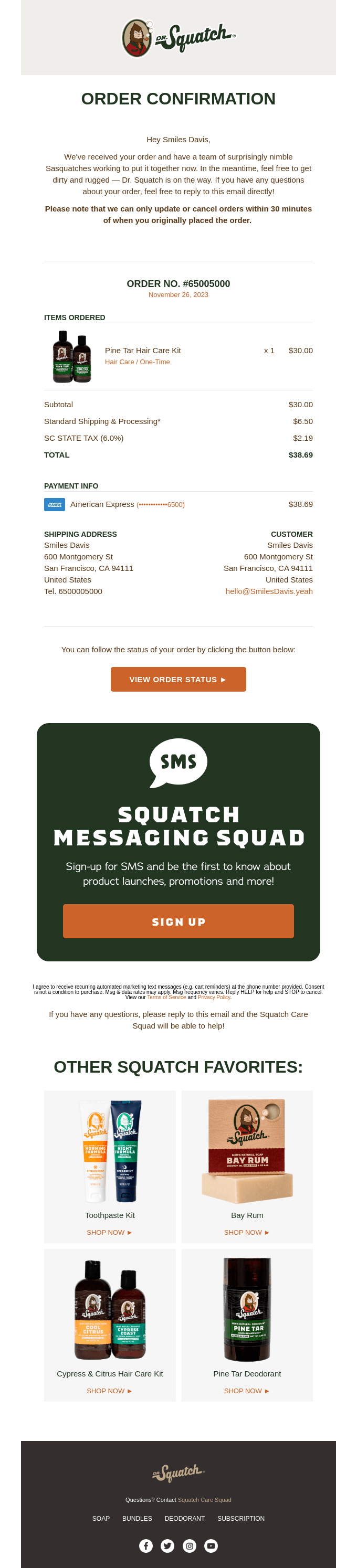
A transactional email is an automated, one-to-one message sent because of an action a person took or an event on their account. Typical examples are a password reset, an order confirmation and a one-time login code.
Postmark describes its transactional stream the same way: one recipient, triggered by user actions such as password resets and receipts (Postmark message streams). The full definition, the types and what to include in each live in what is transactional email.
What is a marketing email?
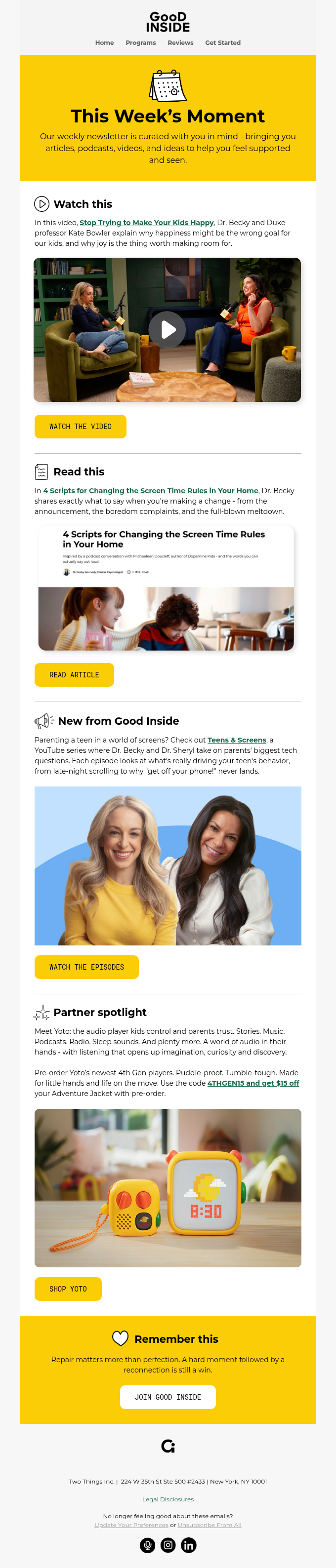
A marketing email is a message sent to many recipients to promote or sell something, whether to build interest or to ask for a purchase. Typical examples are a newsletter, a sale or discount announcement and a product launch email.
Postmark's broadcast stream is defined by the same idea: multiple recipients at once, such as product updates (Postmark message streams). Marketing email runs on lists, segments and consent records. That is where most of the legal rules below bite.
Do the legal rules differ for transactional and marketing email?
Yes. In the US, CAN-SPAM treats a message that is purely transactional or relationship-related differently from a commercial one: it is exempt from most of the law, but it still must not contain false or misleading routing information, per the FTC's CAN-SPAM compliance guide. In the EU, UK and Canada, consent is the main issue for marketing.
United States (CAN-SPAM). The FTC guide says what matters is the "primary purpose" of the message. A message counts as transactional or relationship only if it consists solely of content that does one of these:
- Facilitates, completes or confirms a commercial transaction the recipient already agreed to.
- Gives warranty, recall, safety or security information about something the recipient bought.
- Notifies the recipient of changes to the terms or features of a membership, subscription, account or other ongoing relationship, or gives regular account balance information.
- Gives information about an employment relationship or employee benefits.
- Delivers goods or services under a transaction the recipient already agreed to.
The FTC warns that the law "views these categories narrowly". Being a subscriber doesn't make every message to you transactional.
Commercial email has more to do. The same guide lists these requirements: accurate "From", "To" and "Reply-To" information, a subject line that reflects the content, a clear disclosure that the message is an ad, a valid postal address, a clear way to opt out, and honoring opt-outs within 10 business days. The law makes no exception for business-to-business email. The guide lists penalties of up to $53,088 per violating email (figure as edited January 2024).
EU, UK and Canada, in brief.
- EU: Article 13 of the ePrivacy Directive (2002/58/EC) allows direct marketing email only with the recipient's prior consent. It makes an exception for a business's own similar products sold to existing customers, if they could object free of charge when you collected their address and in every message. It also bans messages that conceal the sender's identity or lack a valid address to send an opt-out to. Member states implement it in national law, and GDPR applies on top wherever personal data is involved.
- UK: Regulation 22 of PECR 2003 has the same shape: prior consent, with an exception for similar products to people whose details you got during a sale, plus a simple way to refuse.
- Canada: section 6 of CASL prohibits sending a commercial electronic message without consent, express or implied, and requires sender identification and an unsubscribe mechanism. Section 6(6) lifts the consent requirement for messages that solely do things such as confirm a transaction the person already agreed to, give warranty, recall or security information, or deliver a product the person is entitled to.
In all three places the consent rules are aimed at marketing, not at messages like receipts and resets. Mailbox providers add their own rules on top: Google's sender guidelines say marketing messages and subscribed messages must support one-click unsubscribe, and ask senders to keep spam rates in Postmaster Tools below 0.3%. Our Gmail and Yahoo requirements page covers both providers in full.
Can a transactional email contain promotion? Where the line gets fuzzy
Sometimes, but the law reads the whole message by its primary purpose, and a promotion can turn a transactional email into a commercial one. The FTC guide says that if the subject line would lead a reasonable recipient to expect a commercial message, or the transactional content doesn't appear mainly at the beginning, the message is treated as commercial.
That's the mixed-content problem. A receipt with a "you might also like" block is the classic case. So is a welcome email that opens with an upsell. The more space the promotion takes, and the higher it sits, the worse the odds that the email still counts as transactional.
How the common cases fall:
- Order confirmation: transactional. It confirms a transaction the customer agreed to. Add a cross-sell and you're mixing.
- Password reset or login code: transactional, always.
- Welcome email: it depends on the content. A confirmation that the account exists, with the next step to take, reads as transactional. One that mostly sells the product or a paid plan reads as marketing.
- Abandoned cart: marketing. The person didn't complete a transaction, and the email's job is to bring them back to buy.
- Shipping notice with a discount banner: mixed. Keep the notice first and the banner small, or take the banner out.
The safe practice is boring. Keep promotion out of your critical emails, and if a business reason says you must include some, treat the whole message as marketing: add the opt-out and the postal address, and send it from the marketing stream. It's a small cost next to a password reset that lands in spam because of a banner.
Why send transactional and marketing email from separate streams or domains
A marketing campaign draws more complaints and unsubscribes than a receipt does, and mailbox providers judge your mail by how recipients react, so sharing one stream or domain lets a bad campaign hurt your password resets. Keeping the two apart contains the damage.
Two services build this in. Postmark says transactional and broadcast traffic "do not mix in Postmark, including IP ranges", and that inbox providers favor that separation (Postmark message streams). Mailtrap requires its bulk stream for all marketing and promotional email, with its own SMTP host and API URL, dedicated IPs for bulk sending, and suppression lists separated by stream, so unsubscribes from bulk mail don't touch transactional mail (Mailtrap bulk stream docs).
What separation looks like in practice:
- Separate sending streams when the service offers them, or separate accounts or API keys when it doesn't.
- Separate subdomains, for example
mail.example.comfor transactional andnews.example.comfor marketing, so each has its own reputation. - Authentication on each one. Every sending domain needs its own SPF, DKIM and DMARC records. Our SPF, DKIM and DMARC guide walks through them.
- Separate suppression lists, so a marketing unsubscribe doesn't silence your receipts (Mailtrap separates them by stream).
For how deliverability differs across providers, see the deliverability section of our list.
Should you use one platform or two for transactional and marketing email?
One platform for both is convenient if the service keeps the streams separate underneath; two platforms is safer if it doesn't. Here is the trade-off.
| One platform for both | Two separate platforms | |
|---|---|---|
| Login and billing | One account, one invoice | Two of each |
| Contacts | Shared contact and suppression data | You sync or export between them |
| Reputation | Depends on how well the streams are separated | Separated by design |
| Plan limits | Volume may count campaigns and transactional together (Brevo does) | Each plan sized for its own job |
| Features | Often built for one type, with the other bolted on | Each tool built for its job |
Here is where each of the seven services in our transactional email ranking puts marketing email. This repeats the section of the ranking that covers it, with sources.
| Service | Transactional | Marketing | Separate stream or product |
|---|---|---|---|
| Mailtrap | Yes | Yes, plus an Email Marketing product | Same account, separate bulk stream (docs) |
| Postmark | Yes | Broadcast stream; no list uploads, editor or campaign reporting, so lists and campaigns run from your app | Same account, separate stream and IP range; ActiveCampaign for automation |
| Resend | Yes, via the Sending feature | Broadcasts, API or dashboard, priced by contacts | Same account; broadcasts don't count against the transactional quota (pricing) |
| SendGrid | Yes | Marketing Campaigns | Separate product, same company |
| Mailgun | Yes, API and SMTP only | None in Mailgun itself | Mailjet is a separate product, same company |
| MailerSend | Yes | No campaign tools | MailerLite is a separate product |
| Amazon SES | Yes | Sends marketing mail through the API or SMTP, with contact lists and topic subscription management, but no campaign builder | None built in; Pinpoint campaigns ended October 30, 2026 |
Vendor docs and pricing pages, checked November 6–7, 2026. MailerSend: absence of a campaign product is based on the pages we read.
If marketing is your main job and transactional is the side order, look at Brevo or Mailjet instead. Both are marketing platforms first and include transactional sending. Brevo counts campaigns and transactional email together toward one volume (Brevo pricing).
How to decide: transactional or marketing email rules
Use these rules when you're unsure which type an email is. When two rules conflict, the stricter one wins.
| If the email… | Then treat it as | And send it |
|---|---|---|
| Is a password reset, login code or security alert | Transactional, always | On the transactional stream, with no promotion |
| Is a newsletter, sale or product announcement | Marketing, always | On the marketing stream, with an opt-out and your postal address |
| Confirms an order or payment the person made | Transactional | On the transactional stream; keep any extras minimal and below the confirmation |
| Mixes confirmation and promotion | Marketing | On the marketing stream, with an opt-out |
| Tries to win back someone who didn't finish buying, such as an abandoned cart | Marketing | On the marketing stream, to people who agreed to receive it |
| Welcomes a new user | Transactional if it only confirms the sign-up and says what happens next; marketing if it mostly sells | Match the stream to the type you picked |
When in doubt, ask who started it. If the person did, it's probably transactional. If you did, it's marketing, and the consent and opt-out rules apply.
Transactional vs marketing email: FAQ
Is a welcome email transactional or marketing?
It depends on what it says. A welcome email that only confirms the account and explains the next step reads as transactional. One that mainly promotes the product, a paid plan or an offer is marketing. Under CAN-SPAM, a message is transactional only if it consists solely of the FTC's listed content, so a welcome with an upsell is commercial.
Can I put promotions in a transactional email?
You can, but the whole message is then judged by its primary purpose. The FTC treats a mixed message as commercial if the subject line suggests a commercial message or the transactional content isn't mainly at the start. Safer: keep promotion out of critical emails. More in the section on where the line gets fuzzy.
Do transactional emails need an unsubscribe link?
No, not under CAN-SPAM. The FTC's guide exempts purely transactional or relationship messages from most of the law, which includes the opt-out requirement; they must still not contain false or misleading routing information. If the email also promotes something, it counts as commercial and needs an opt-out. Rules in the EU, UK and Canada differ, so check them.
Is a password reset email a transactional email?
Yes. A password reset is triggered by the person's own request and gives them security information they need right away. It is the textbook transactional email, and it should carry no promotion. Our guide on what transactional email is lists the other common types.
Should I use the same service for transactional and marketing email?
It can work if the service keeps the two on separate streams, as Postmark and Mailtrap do, or sells a separate marketing product under one login, as SendGrid does. If it can't separate them, use two services. Our one platform or two section compares each of the seven.
Are order confirmations marketing emails?
No. An order confirmation confirms a transaction the customer already agreed to, one of the categories the FTC lists as transactional. It turns into a mixed message if you add a cross-sell block. Keep the confirmation first and the extras small, or move the offer to a separate marketing email.
Is an abandoned cart email transactional?
No, it's marketing. The customer didn't complete a transaction, and the email's goal is to bring them back to buy, which makes it a commercial message under CAN-SPAM. In the EU and UK it also generally needs prior consent. Send it from your marketing stream with an opt-out.